Uncategorized
Why Some Neighborhoods Become More Valuable Than Others
A
admin_xbrick
Real Estate Expert
21 Sep 2026
9 min read
Walk around almost any city and you will notice something interesting. Two neighborhoods can be quite close to each other, yet the prices of homes can be completely different. In one area, people may be paying a premium for a small apartment. A few streets away, a similar-sized property might cost much less.
It can seem unfair or even a little confusing at first.
After all, the buildings may look similar. The streets may be similar too. So why does one neighborhood attract more attention and higher prices?
The simple answer is that people are not only paying for a house. They are also paying for everything that comes with living in that particular area.
A convenient commute, a good school nearby, a peaceful street, a nice park, useful shops, and a sense of community can all make a difference. When enough of these things come together, a neighborhood can become much more desirable.
And once people start wanting to live there, the value of the area often follows.
It Starts With Location
Location sounds like an obvious answer, but it is worth thinking about what it actually means.
For most people, a home is part of a much bigger daily routine. There is work to get to, groceries to buy, children to take to school, appointments to attend, and friends or family to visit.
If all of those things are reasonably close, life becomes easier.
That is why neighborhoods near business districts, universities, hospitals, shopping areas, and city centers often attract plenty of interest. Someone may be willing to pay more for a smaller home if it means avoiding a long commute every morning.
But being close to the city center is not automatically better for everyone. Some people would happily trade a few extra minutes of travel for a quieter street, more space, or a little greenery.
A good location is really about finding the right balance between convenience and lifestyle.
A Shorter Commute Can Be Worth a Lot
Think about how much time people spend traveling every week.
If a person can save thirty minutes each way by living closer to work, that adds up quickly. Over months and years, those saved hours become valuable.
This is one reason transportation can have such a strong influence on neighborhood demand.
A home near a metro station, railway station, major road, or dependable bus route can be attractive simply because getting around is easier.
Sometimes one transportation project can change an area’s reputation almost overnight. A neighborhood that was once considered inconvenient may suddenly become much easier to reach.
And when more people start coming in, businesses usually notice.
Jobs Can Put a Neighborhood on the Map
A new office building may not sound like something that changes an entire neighborhood, but it can.
When a major company, hospital, university, or business center opens nearby, employees need places to live. Some will want to be close enough to walk, cycle, or take a short ride to work.
Then those new residents need everyday services.
They need somewhere to have lunch. They need groceries. They might want a gym, a pharmacy, a coffee shop, or a place to meet friends after work.
One change can lead to another.
More jobs bring more people. More people create demand for homes. More customers attract businesses. More businesses make the neighborhood more convenient.
Before long, the area can feel very different from what it was a few years earlier.
Families Look Closely at Schools
Ask parents what they consider before buying a home, and schools are likely to come up.
Families often want schools that are easy to reach and that they feel comfortable choosing for their children. When a neighborhood has schools with a strong local reputation, it can become more attractive to families.
That can affect housing demand.
Universities and colleges have a different but similar effect. Students and staff need places to live, eat, shop, and spend their free time. As a result, areas around major educational institutions often develop their own mix of apartments, cafés, restaurants, bookstores, and other businesses.
Education, in other words, can shape an entire local economy.
Feeling Safe Changes How People Use a Place
There is a difference between simply having a house in a neighborhood and actually enjoying life there.
People want to feel comfortable when they walk outside. They want streets that are reasonably well maintained, adequate lighting at night, safe crossings, and public areas that feel welcoming.
Safety is obviously important, but it is also connected to how a neighborhood feels.
When people are comfortable walking to the local store or sitting in a park, they tend to spend more time outside. They see their neighbors. Children have places to play. Local shops get more visitors.
Little things like these can gradually create a stronger sense of community.
Green Space Is More Valuable Than It Looks
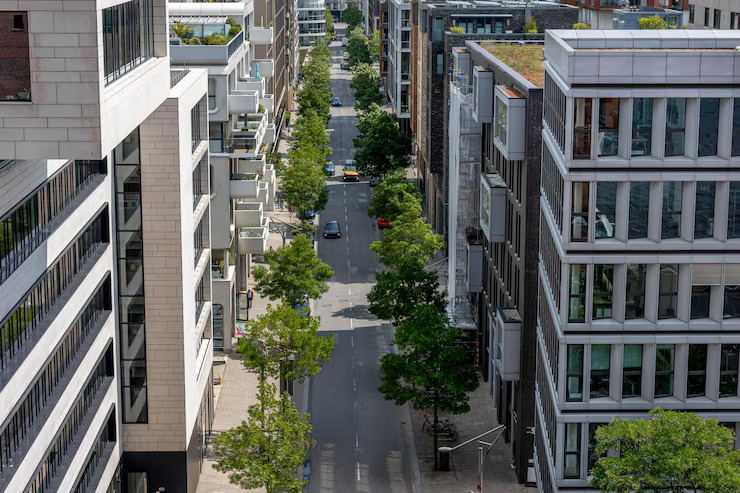
A tree-lined street or a small park may not seem like a major economic feature, but many people notice them when choosing where to live.
A nearby park gives residents somewhere to walk, exercise, take children, meet friends, or simply sit outside for a while.
Compare two otherwise similar apartments. One overlooks a pleasant green space. The other faces a busy road with constant traffic.
For many buyers, the first option will be more appealing.
This is especially true in crowded cities, where open and peaceful spaces can be difficult to find.
Good Businesses Give an Area Personality
There are neighborhoods that people visit because they have a certain feel.
Maybe there is a great bakery everyone talks about. Perhaps the area has independent cafés, small restaurants, weekend markets, or interesting local shops.
These businesses do more than sell things. They give people a reason to spend time in the neighborhood.
And once an area starts attracting visitors, other business owners may take notice. A café opens next to the popular restaurant. A small shop follows. Then another restaurant appears.
Slowly, the neighborhood develops its own identity.
That identity can become part of what people are willing to pay for.
Development Can Be a Turning Point
Sometimes a neighborhood changes because someone decides to invest heavily in it.
A new hospital, shopping center, school, office complex, apartment development, or transportation project can bring a lot of activity.
New buildings can create jobs and bring services that were previously missing. Roads and public facilities may also improve.
But development has a downside when it happens too quickly or without enough planning. More people can mean more traffic, construction, noise, and pressure on housing.
So simply saying that “development is good” misses the bigger picture. What matters is what is being built, where it is being built, and whether the neighborhood can handle the change.
The Basic Rule of Supply and Demand
There is also a straightforward reason some properties cost more than others.
If lots of people want to live in an area and there are only a few homes available, buyers and renters have to compete.
That can push prices up.
If there are many homes available and fewer people interested in moving there, owners may have to reduce prices or offer better terms.
The amount of land available can make this even more noticeable. Some neighborhoods simply cannot grow outward because they are surrounded by water, mountains, protected land, or existing development.
When demand keeps increasing but the number of homes cannot increase quickly enough, prices can rise.
Reputation Takes Time
Some neighborhoods become desirable because they develop a reputation that goes beyond practical advantages.
People might associate an area with beautiful old buildings, good food, art, nightlife, shopping, or a particular lifestyle.
Interestingly, this reputation can start with something very small.
One restaurant becomes popular. Then a few more businesses arrive. People start visiting on weekends. Local events become more common. Photos of the area appear on social media.
Eventually, people begin thinking of the neighborhood as a destination.
Once that happens, its identity can become one of its biggest attractions.
People Buy Into the Future Too
When someone buys a home, they are not necessarily thinking only about today.
They may ask questions like: What will this area look like in five years? Will transportation improve? Are new offices or schools coming? Is the population growing?
Plans for a new metro line, hospital, university, business district, or shopping center can make people pay attention to an area.
But there is an important catch: plans are not promises.
Projects can be delayed, redesigned, or cancelled. So anyone looking at future development needs to separate confirmed information from speculation.
Neighborhoods Can Change Completely
Perhaps the most important thing to remember is that neighborhoods are never frozen in time.
An area that seems ordinary today might look completely different a decade from now. New residents arrive, businesses open, roads improve, and public transportation expands.
Sometimes the change is so gradual that residents hardly notice it at first.
Then one day, they look around and realize the neighborhood has become a completely different place.
The opposite can happen too. A once-popular area can lose some of its appeal if major employers leave, infrastructure becomes neglected, or businesses close.
That is why neighborhood value can rise or fall over time.
Conclusion
So, why does one neighborhood become more valuable than another?
Usually, there is no single answer.
It might start with a convenient location. Then a new transportation connection makes commuting easier. A company moves in and creates jobs. Families arrive because of the schools. Shops and restaurants follow. A park gets improved. New homes are built.
None of these changes alone has to transform a neighborhood. But together, they can.
The most valuable part of a neighborhood is often not something you can point to on a property listing. It is the experience of living there.
People are paying for shorter commutes, convenient services, pleasant surroundings, good schools, opportunities, and sometimes simply the feeling that they belong.
That is why neighborhood value is about much more than bricks, concrete, and square footage. A home is a physical space, but the neighborhood around it is what turns that space into a place to live.
And cities are always changing. The quiet neighborhood that few people notice today could, with the right combination of opportunities and investment, become one of the most sought-after areas tomorrow.
Related Articles